
On Disinterested Action and Inner Truth
One of the quiet illusions we often carry on the spiritual path is the belief that goodness should be rewarded. Somewhere within us lives the hope that if we are sincere, modest, fair, and well-intentioned, life will respond with ease, harmony, and appreciation. When this does not happen — when resistance, misunderstanding, or hostility arise instead — confusion sets in.
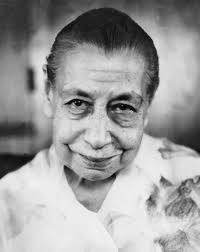
The Mother addresses this illusion with great clarity. She reminds us that the moment one begins to move consciously toward inner and outer perfection, difficulties do not diminish; they increase. This is not a failure of goodness, but a test of its purity.
Many seekers experience this paradox. “Now that I am trying to be good,” they say, “everyone seems to be bad to me.” But this experience is not meant to discourage. It is meant to reveal motive.
The Subtle Motive Behind Goodness
There is a form of goodness that is transactional. It seeks harmony in return, recognition in exchange, or at least a smoother passage through life. When goodness is practised with this hidden expectation, it remains bound to the ego — refined, perhaps, but still centred on personal comfort or moral self-image.
The Mother’s teaching is uncompromising:
one must not be good in order to receive goodness from others.
One must be good because goodness is true.
The moment we expect a result — approval, gratitude, or even moral superiority — the action loses its spiritual value. It becomes a strategy rather than a surrender.
Disinterested Action as a Spiritual Discipline
Sri Aurobindo repeatedly emphasised the importance of nishkama karma — action without desire for fruits. The Mother brings this principle into daily life with sharp precision. Goodness, she tells us, must be disinterested, not merely generous.
To act rightly without expectation is not weakness. It requires courage. It demands that one remain faithful to truth even when misunderstood, to kindness even when it is met with indifference, and to integrity even when it appears to bring difficulty rather than relief.
This kind of goodness is not dependent on circumstances. It is an inner orientation — a choice to align with truth rather than outcome.
Why Difficulties Increase
Why do obstacles seem to multiply when one sincerely tries to live rightly?
Because growth invites resistance.
When consciousness begins to rise, the parts of our nature — and of the world around us — that are not ready for that vibration react. Old habits resist change. Established patterns feel threatened. This friction is not a punishment; it is a sign of movement.
The spiritual path is not a path of avoidance, but of transformation. And transformation is rarely comfortable.
The Courage to Remain True
To be good for the sake of being good requires inner strength. It means standing by one’s values even when they bring no immediate benefit. It means letting go of the need to be validated by others. It means accepting that goodness may sometimes lead to solitude rather than companionship.
Yet this solitude is not emptiness. It is clarity.
When action is purified of expectation, it becomes free. When goodness is no longer a means to an end, it becomes an expression of the soul.
As Stephen Post reminds us, courage allows us to love. And love, when freed from demand, becomes a force of transformation — both for oneself and for the world.
Goodness as Alignment, Not Strategy
In the integral vision of Sri Aurobindo and The Mother, spiritual life is not about moral performance. It is about alignment with the Divine consciousness. Goodness, then, is not a tool for success, nor a shield against suffering. It is a way of being that reflects inner truth.
To be good for the sake of being good is to act in harmony with one’s deepest self — regardless of consequences.
Such goodness may not make life easier.
But it makes life truer.
And in the long journey of consciousness, truth is the only real victory.