
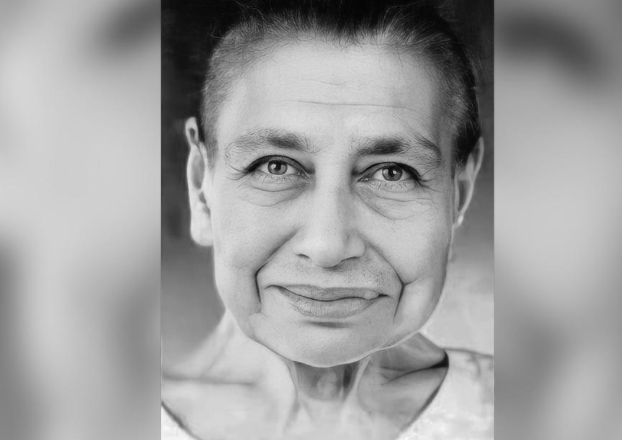
Imagine a city belonging to no single nation, where men and women of all countries can live in peace and progressive harmony, above all creeds, politics, and nationalities.
This is not just a utopian dream; it is the foundational charter of Auroville, a universal township located in South India. Inaugurated in 1968 and guided by the vision of The Mother, Auroville was designed to be a living laboratory for human unity.
Here is a look at the philosophy behind this extraordinary social experiment and what it represents for the future of humanity.
The Purpose of Auroville
Throughout history, humanity has been divided by borders, religions, and economic classes. The Mother, working alongside Sri Aurobindo, envisioned a place where these superficial divisions would dissolve. The goal of Auroville is not to create a perfect society of flawless people, but to create an environment where the driving force of life is spiritual growth rather than material accumulation.
The Mother wrote a brief, powerful charter for the city, which includes these core principles:
- Belonging to Humanity: Auroville belongs to nobody in particular, but to humanity as a whole.
- Unending Education: It is a place of constant progress and unending education.
- Bridge between Past and Future: It seeks to take advantage of all discoveries from without and within to boldly spring towards future realizations.
The Matrimandir: The Soul of the City
At the geographical and spiritual center of Auroville sits the Matrimandir (Sanskrit for “Temple of the Mother”). Visually stunning, it is a massive, golden, spherical structure emerging from the earth like a rising sun.
However, it is not a traditional temple. There are no rituals, no priests, and no specific religion practiced within it. Inside is a pure white, completely silent chamber housing a massive crystal globe. The Mother designed the Matrimandir simply as a place for individuals to find their own consciousness, in silence and concentration.
What We Can Learn from the Auroville Experiment
Even if we never visit Auroville, its guiding principles offer a profound template for our own lives:
- Collaboration over Competition: What would happen in our own communities if we prioritized mutual growth over individual success?
- Material Wealth as a Tool: In Auroville, money is intended to be a circulating force for the community’s needs, not a measure of personal worth.
- Inner Discovery: The existence of the Matrimandir reminds us to carve out a quiet center in our own busy lives—a place free from dogma where we can connect with our highest selves.
Auroville is still evolving, facing the inevitable challenges of human nature. Yet, it stands as a bold, living testament to The Mother’s belief that a united, spiritually conscious humanity is not just possible, but destined.
Bringing the Light Down: The Core of Sri Aurobindo’s Integral Yoga
When we hear the word “yoga,” we often think of physical postures on a mat. When we think of “spirituality,” we might picture a monk meditating in an isolated cave, seeking to escape the suffering of the physical world to find peace in Nirvana or Heaven.
Sri Aurobindo revolutionized this concept. He introduced a path known as Integral Yoga, and its goal is profoundly different from traditional ascetic paths. Instead of trying to escape the world to find the Divine, Integral Yoga seeks to bring the Divine down into the physical world to transform it.
All Life is Yoga
Sri Aurobindo famously stated, “All life is Yoga.” This means that your spiritual practice isn’t confined to the hour you spend meditating in the morning; it encompasses everything you do.
Whether you are sweeping the floor, writing an email, dealing with a difficult coworker, or creating art, every single action can be a spiritual practice if it is done with the right consciousness. The goal is not to abandon society, but to live fully within it while anchored in a higher state of awareness.
The Three Pillars of Practice
Integral Yoga does not rely on strict physical exercises, breathing techniques, or rigid rituals. Instead, it relies on psychological and spiritual movements of the heart and mind. Sri Aurobindo and The Mother outlined three essential movements for this transformation:
- Aspiration: This is a quiet, persistent yearning for the Divine. It is the flame in the heart that seeks truth, light, and higher consciousness, rather than just material comfort.
- Rejection: This does not mean hating yourself or the world. It means consciously observing and letting go of the lower movements of human nature—fear, doubt, ego, jealousy, and anger—to make room for something higher.
- Surrender: This is perhaps the most crucial step. It is the willing offering of one’s life, mind, and actions to the Divine force. It is moving from “I want” to “Let thy will be done.”
The Evolution of Consciousness
Sri Aurobindo taught that humanity is not the final step of evolution. Just as life emerged from matter, and mind emerged from life, he proposed that a higher, “Supramental” consciousness is currently trying to emerge from the human mind.
We are transitional beings. By practicing Integral Yoga, we are actively participating in our own evolution. We are clearing the mud from our own windows so that a new, transformative light can shine through us and, ultimately, change the world itself.
Would you like to dive deeper into one of their specific written works next, like Sri Aurobindo’s epic poem Savitri, or focus more on The Mother’s practical advice for daily living?