
When we look at a flower, we usually see a fleeting moment of beauty, a splash of color, or a pleasant fragrance. But what if a flower is actually a living manifestation of consciousness? What if it carries a specific spiritual vibration that can speak directly to the human soul?
In the Integral Yoga of Sri Aurobindo and his spiritual collaborator, Mirra Alfassa (affectionately known as The Mother), flowers are not just botanical wonders—they are profound spiritual messengers. Over her lifetime, The Mother observed, studied, and assigned specific spiritual meanings to nearly 900 different flowers, creating a unique and beautiful vocabulary of nature.
Here is a look into the philosophy behind this practice and the specific meanings of some of our most beloved flowers.
The Philosophy: Why Flowers?
According to Sri Aurobindo and The Mother, everything in the universe contains a spark of the Divine, but nature expresses this in its own unique, silent way. The Mother taught that flowers are the most spontaneous, pure, and open manifestation of the Divine in the physical world.
Unlike human beings, who are often clouded by ego, doubts, and complex emotions, a flower simply is. It opens itself completely to the light, gives its beauty freely to anyone who passes by, and fades without complaint. Because of this profound receptivity, The Mother explained that flowers can absorb, hold, and transmit spiritual vibrations.
When you offer a flower to the Divine, or give one to another person, you are not just offering a plant; you are offering the specific state of consciousness that the flower represents.
Common Flowers and Their Spiritual Meanings
The Mother gave precise names to hundreds of flowers based on the spiritual vibration she perceived in them. Here are a few of the most profound:
1. The Lotus: The Avatar / Supreme Consciousness
In many Eastern traditions, the lotus is sacred, and in Integral Yoga, it holds the highest place.
- The Red Lotus: Represents the Avatar (the Divine incarnated in physical form) and is specifically associated with Sri Aurobindo.
- The White Lotus: Represents the Supreme Divine Consciousness and is associated with The Mother. The lotus grows in the mud but blooms perfectly pure above the water, symbolizing spiritual evolution from the darkness of the material world into the light of absolute consciousness.
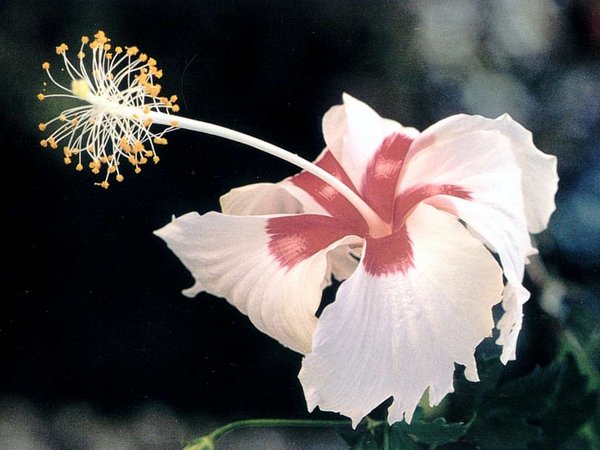
2. The Hibiscus: Power
With its striking, vibrant petals and dynamic energy, the hibiscus represents Power. Different colors and varieties represent different nuances of power, such as the power of harmony, the power of action, or the power of the Divine Mother to overcome obstacles.
3. The Rose: Surrender and Love
The rose is universally loved, and in this spiritual vocabulary, it speaks to the heart’s relationship with the Divine.
- Red Rose: Human passions turning into Divine Love.
- Pink Rose: Surrender (the joyful, trusting offering of oneself).
- White Rose: Pure, integral love for the Divine.
4. Plumeria (Frangipani): Psychological Perfection
This incredibly fragrant, symmetrical flower represents Psychological Perfection. The Mother noted that true perfection requires a combination of several qualities working in harmony: sincerity, faith, devotion, aspiration, surrender,. and a peaceful mind.
5. Bougainvillea: Protection
These hardy, vibrant, paper-like flowers that grow so abundantly in warm climates symbolize Protection. Their enduring nature and ability to thrive represent the spiritual shielding that keeps negative forces at bay.
6. Jasmine: Purity
The tiny, star-like jasmine flower, famous for its sweet, intoxicating scent, represents Purity. It is a reminder of the quiet, unblemished lightness of a mind and heart that are entirely clear and open.
How to Bring This Wisdom into Your Life
You don’t need to be an expert in botany to practice the yoga of flowers. Here are a few simple ways to integrate this beautiful philosophy into your daily life:
- Practice Conscious Gifting: The next time you give flowers to a friend or loved one, look up their spiritual significance. Choose a flower that represents exactly what you wish for them—like Peace, Joy, or Courage.
- Create a Focal Point: Keep a specific flower on your desk or in your home as a visual reminder of a quality you want to cultivate. If you are going through a difficult time, a Bougainvillea (Protection) or a pink Rose (Surrender) can gently guide your thoughts back to a state of trust.
- Observe Without Grasping: Spend time looking at a flower without analyzing it. Notice its shape, its color, and its silent presence. Let it teach you how to simply be, open to the light.
Flowers are nature’s smile. By learning to read their silent language, we open ourselves to a world of subtle beauty, constant support, and profound spiritual truth.